EU Leaders Will Demand UK Close €70bn Ukraine Funding Gap
Brussels aims to pressure Prime Minister Andy Burnham at the November summit as the European Union seeks to shift the financial burden of the war onto G7 partners.
By Olivia Grant ·
Ukraine faces a 70 billion euro funding shortfall in 2027, a deficit that European Union leaders intend to force the United Kingdom, Canada, and Japan to help fill. The 58 billion pound gap will emerge as the war enters its fifth winter and Russia escalates attacks.
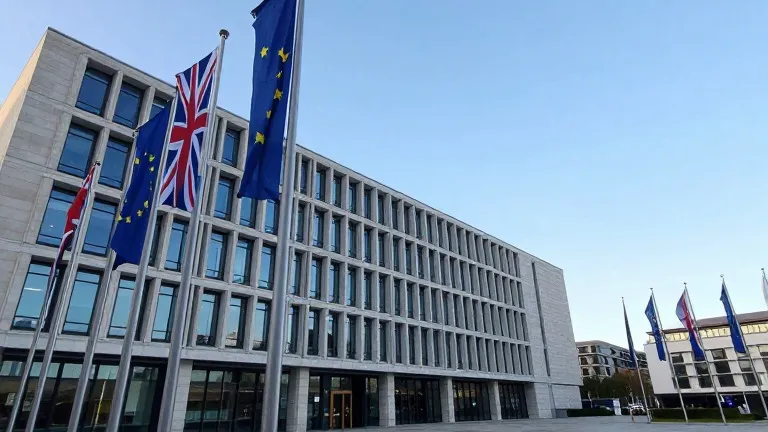
Prime Minister Andy Burnham will meet European Commission President Ursula von der Leyen and European Council President António Costa at a summit in Brussels on November 20. The meeting is the central venue where EU officials plan to press the British government for a larger financial contribution.
Von der Leyen told reporters last week that the EU needs other partners to step up. She stated, "We will continue to lead, but we urgently need other partners to step up." The European Commission considers a two-thirds share to be the fair limit for EU funding. It currently covers 80% of Ukraine's financial needs.
The EU agreed to a 90 billion euro loan last year to cover two-thirds of Kyiv's funding for 2026 and 2027. However, rising costs have outpaced that allocation. Brussels says its requests for extra aid from G7 nations at recent meetings have gone unanswered.
Canada will face the same pressure next week. Von der Leyen plans to ask Prime Minister Mark Carney to help cover the shortfall at an EU-Canada summit in Montreal. The EU is also expanding its search for allies to include Switzerland, South Korea, Australia, and New Zealand.
The timing creates pressure on the British government. Chancellor John Healey is preparing his first budget next week. He must weigh calls for increased spending against rising borrowing costs and a weakening economic outlook. Healey said earlier this month he is "working on different ways we can step up support for Ukraine: military, diplomatic and economic."
The UK has committed 25 billion pounds to Ukraine, including 16 billion pounds in military aid. It is the fourth largest donor, behind the United States, Germany, and France. The Kiel Institute's Ukraine Support Tracker shows the UK contributes 0.86% of national income to the war effort.
France contributes 1.1% of its national income, while Germany contributes 1.5%. Denmark and Estonia lead all donors at 4.2% and 3.8% respectively. When EU program contributions are stripped from the data, the UK's share aligns more closely with France and Germany.
The November summit will conclude three major agreements. A food and animal health deal will reduce Brexit paperwork. A linkage of emissions trading schemes will protect British industry from European carbon taxes. A youth mobility scheme will allow people aged 18 to 30 to live, work, travel, and study across the Channel.
The commission proposed delaying the dispute over university tuition fees to technical talks within six months of the summit. The UK wants to charge EU students the international rate, which is about four times the domestic fee. The EU wants to return to pre-Brexit home rates. An EU diplomat noted, "The leverage is that the UK needs this." A second diplomat said there is no clear majority among the 27 member states to drop the issue for six months.
Source: The Guardian