Federal Courts Clear Path for DOJ to Block Evanston Reparations
The Justice Department has entered a lawsuit challenging a $25,000 housing grant program while the city's founder expands the model to over 100 other communities.
By Giovanni Serrano ·
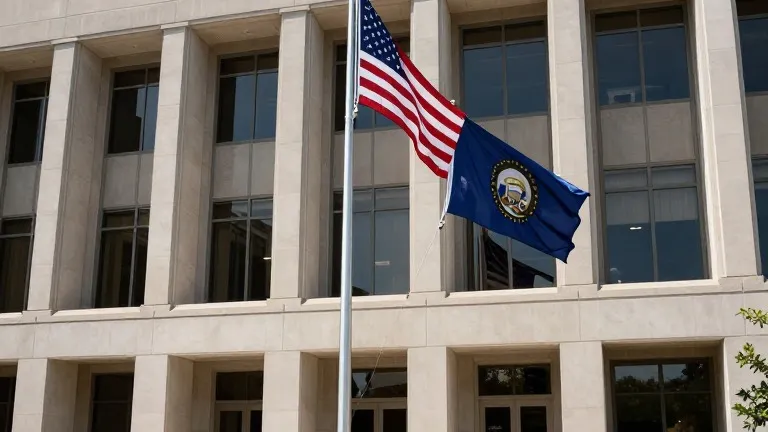
The Justice Department has joined a legal fight to stop a housing grant program in Evanston, Illinois, that provides $25,000 to Black residents. A federal judge allowed the department to intervene in a lawsuit filed by Judicial Watch this month. The intervention puts the federal government directly against the country's first municipal reparations program.
Robin Rue Simmons, who now uses the name N'nanba, helped create the Evanston program. She is now working to spread the model to more than 100 communities across the country. Her effort is facing new legal hurdles as the Trump administration pushes back against race-based initiatives.
The lawsuit argues that the city distributes funds based on race without identifying specific harm to each recipient. Michael Bekesha, an attorney for the plaintiffs, stated that the Constitution prevents governments from picking winners and losers based entirely on race. The Justice Department alleges the program violates the 14th Amendment's equal protection clause and the Fair Housing Act.
Kiersten Pels, a Justice Department spokeswoman, said race-based government benefit programs are unconstitutional. She noted that these programs often violate federal civil rights law. Last year, the department sent a warning letter to leaders in Asheville and Buncombe County, North Carolina, after they considered starting their own reparations programs.
The legal challenge comes as the United States marks its 250th anniversary. The administration's campaign against diversity, equity, and inclusion programs has led some institutions to scale back efforts. In March, the United Nations General Assembly passed a resolution calling the trafficking of enslaved Africans the gravest crime against humanity. More than 120 countries voted in favor of the resolution, while the United States, Argentina, and Israel voted against it.
Rue Simmons, who chairs Evanston's Reparations Committee, said the administration creates barriers to achieving federal redress. She added that the group still stands on federal redress as its collective north star. William Darity, a co-author on a book about reparations, said no president has supported comprehensive Black reparations with enthusiasm. He noted that Trump speaks the word but does so with hostility.
In a speech in September, President Trump told supporters that they want to steal money for reparations. He added that the effort is going nowhere. The trans-Atlantic slave trade forced an estimated 12.5 million Africans onto ships bound for the Americas. About 1.8 million did not survive the journey, and roughly 388,000 were taken to what is now the United States.
Universities are also adjusting their approaches under the new administration. Georgetown University continues to offer admission consideration to descendants of enslaved people. However, Richard Cellini, who previously led a project at Harvard, said new work across higher education has stalled. Harvard fired his team days after the president's January 2025 anti-DEI order, though research by an outside firm continues.
Some programs continue to provide direct benefits. Juan Woolfolk, 36, is using a $10,000 scholarship from Georgetown to study museum studies at Southern University at New Orleans. Virginia Theological Seminary makes annual cash payments to descendants of people who labored on its campus. The endowment funding these payments has grown from $1.7 million to $2.8 million since 2019.
Joe Martin, 46, received a grant in Evanston. He works as a Delta flight attendant. Martin said that 40 acres and a mule did not go down the way it was supposed to. He noted that when a legitimate program is created, the government acts like it is not real.
Source: KSAT 12
More News · Georgetown news · Report a business · Got a Story?