Netanyahu Leads with 20.6% of Votes as Israel's Turnout Hits 77.7%
Arab-led factions may hold the balance of power in the 120-seat Knesset, forcing weeks of coalition negotiations.
By Olivia Grant ·
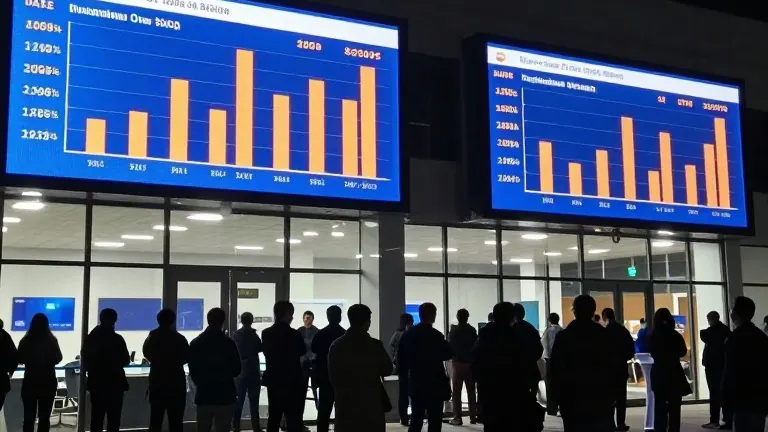
77.7% of eligible Israelis cast ballots in the October 28 election, the highest participation rate since 1999. Prime Minister Benjamin Netanyahu’s Likud party leads early counts with 20.6% of the vote, according to the Central Elections Committee. Gadi Eisenkot’s Yashar party trails with 16.8%. These figures represent a preliminary count based on 50% of reported votes. The final tally, including hundreds of thousands of absentee ballots, is expected within days.
Exit polls from major Israeli television stations project that Netanyahu’s governing bloc and Eisenkot’s opposition forces will each secure approximately 51 seats in the 120-member Knesset. Arab-led parties are projected to win around 18 seats. No single party has ever achieved an outright majority in the Israeli parliament. This stalemate sets the stage for protracted coalition negotiations. Israel’s President, Isaac Herzog, holds the authority to invite any party leader to form a government, not just the one with the most seats.
Netanyahu declared his intent to remain the country’s longest-serving prime minister. He dismissed the prospect of partnering with Arab parties as treasonous. “We must establish a strong, right-wing, nationalist government,” Netanyahu said. “We must not endanger Israel and establish a government that relies on anti-Zionist Arab parties.” He cited military achievements over the past three years as evidence of his leadership. His main challenger, Eisenkot, left the door open to cooperation with Arab factions under specific conditions. These conditions include recognizing Israel as a Jewish state and labeling Hamas an extremist group.
The United Arab List, the only Arab party to join a governing coalition in 2021, reported a celebratory mood at its headquarters. Party leader Mansour Abbas stated, “We are here, we are not on the sidelines.” Arab citizens, descendants of Palestinians who remained in the state after 1948, comprise 20% of Israel’s population. Their potential alliance could determine the next government. Some of Eisenkot’s likely partners have previously ruled out such a coalition, citing sensitivity around the Palestinian issue.
Far-right National Security Minister Itamar Ben-Gvir suffered a significant electoral setback. Many Israelis viewed him as the most polarizing figure in Netanyahu’s government. He gained prominence for taunting Palestinian detainees and declaring that many in Gaza were “not even people.” His party’s performance reflects the electorate’s reaction to the far-right wing of the current administration. The results also signal dissatisfaction with draft exemptions for the ultra-Orthodox Jewish population.
Eisenkot pledged to form a government and promised “a new era, an era of hope.” His supporters cite his military credentials and personal losses, including his son and two nephews, killed in Gaza. They view him as a counterweight to what they describe as creeping illiberalism. Parties likely to support Eisenkot have vowed to improve Israel’s international standing. They also plan to work toward conscripting ultra-Orthodox men and strengthening the independence of the judiciary.
The election occurred against the backdrop of three years of war following the October 7, 2023, Hamas-led attack. Conflicts in Gaza, Lebanon, and Iran have strained Israel’s diplomatic ties. Public support among Americans has declined, and European partners have imposed sanctions. Netanyahu faces an international arrest warrant for alleged crimes against humanity in Gaza, a charge he denies. If coalition talks fail, Israel may face new elections early next year. The country held five elections between April 2019 and November 2022 due to similar political deadlocks.
Source: WTOP News