40 Percent: Student List Targets Ruling Party in Serbia Vote
Polls show the student coalition could win nearly half the vote, challenging the Serbian Progressive Party's grip on power after a decade and a half.
By Giovanni Serrano ·
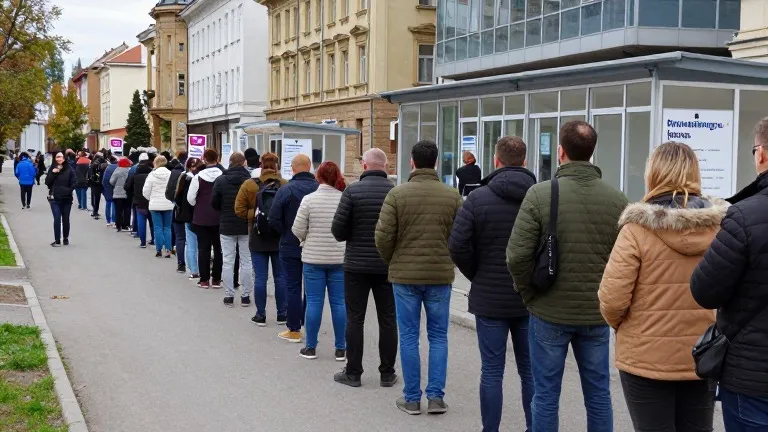
Serbian voters head to the polls on Sunday to decide if the ruling party can keep its grip on the country after 14 years. The race is tighter than any since 2012, with a student-led coalition poised to break the long-standing hold of the Serbian Progressive Party. For many citizens, the ballot box is the first real chance to test the government's power since the current administration took office.
Political scientist Dusan Spasojevic notes that these are the first competitive elections with an uncertain outcome under the current leadership. He says recent polling suggests the Student List could capture more than 40 percent of the total vote. That figure would mark a major shift in a political arena that has been dominated by the ruling party for over a decade.
The Student List emerged from a movement that began protesting in late 2024 after a concrete canopy collapsed at the Novi Sad railway station. That disaster killed 16 people and sparked a national conversation about corruption and accountability. The coalition now argues that the election is a chance to demand answers and reset the political relationship between the state and its people.
Campaigning for the student group has become a physical act of solidarity. Thousands of supporters walked for days from various parts of the country to reach Belgrade for the final rally on Thursday evening. Arsa Stojanovic, a biology student, told the crowd that the walkers had crossed the nation and learned they could count on local support. Aleksandar Cupic, a professor and candidate, said the atmosphere 'smells like freedom.' The evening ended with a traditional circle dance.
The ruling Serbian Progressive Party is fighting for a fourth term on a message of stability. The party argues that changing the government risks chaos and that voting for the status quo ensures prosperity and sovereignty. Former President Aleksandar Vucic told supporters that opponents are acting on foreign orders and have attacked the party with billions of euros. The party portrays the vote as a battle for Serbia's future against external interference.
The campaign has been marked by tension and accusations of unfair play. The independent monitoring group CRTA recorded 116 incidents of physical violence or verbal threats in the final week. These included attacks on campaigners and attempts to seize banners. CRTA also reported that opposition activists faced surveillance and police questioning, while the group said the campaign was neither free nor fair due to narrowing freedoms.
Media coverage has heavily favored the government. CRTA found that almost three-quarters of airtime on national television went to government representatives. More than 80 percent of coverage regarding the Student List was negative. Anonymous sources also told Deutsche Welle that some voters were offered between 30 and 150 euros, or family holiday packages, to support the ruling party.
Authorities have warned of potential street violence on election night, citing alleged links between student groups and foreign intelligence services. Several people have been arrested on suspicion of plotting disturbances. An EU Commission spokesperson stated that key recommendations for improving Serbia's electoral framework remain unimplemented. The EU stressed that democracy and the rule of law are central to Serbia's accession process as a candidate country.
Source: Deutsche Welle