Israel's fragmented parliament sets stage for contentious coalition talks
With no bloc holding a majority, parties must negotiate across deep ideological divides before new Knesset members are sworn in.
By Giovanni Serrano ·
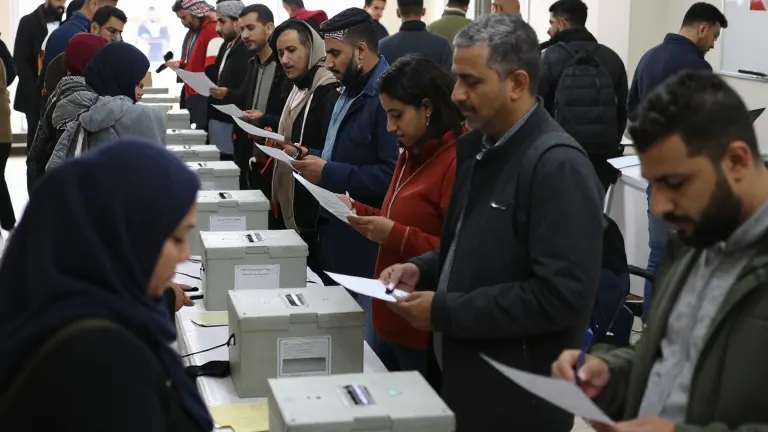
Prime Minister Benjamin Netanyahu’s coalition lost its majority in the Knesset, forcing Israeli political parties into a period of high-stakes bargaining. Final results released Friday show Netanyahu’s bloc secured 53 seats. The main opposition bloc won 48 seats, while Arab-led parties took the remaining 19, marking a historic electoral showing. To form a stable government, leaders must secure at least 61 of the 120 seats. The resulting parliament is fragmented, requiring alliances between groups with divergent priorities, including ultra-Orthodox, secular, and Arab-led factions.
The uncertainty has intensified as the government continues to hold power. Yair Lapid, a centrist politician, described the upcoming negotiations as the truly hard part and asked the public for patience. President Isaac Herzog will receive certified results next Wednesday. He will then task a leader with forming a new cabinet. This individual could be Netanyahu, the leader of the party that received the most votes, or another figure chosen by party leaders.
Tensions rose in the hours before the final count. Netanyahu and his Likud party raised unsubstantiated claims that Arab-led parties stole the election, potentially with foreign help. The opposition accused Netanyahu of demonizing the Arab population, which comprises 20% of the country. The group turned out in large numbers, partly in response to the presence of far-right allies like National Security Minister Itamar Ben-Gvir. Netanyahu stated on social media that forming a coalition with Arab parties is forbidden.
Supreme Court Justice Noam Sohlberg, head of the election committee, told the Shin Bet security agency to investigate serious suspicions of foreign interference. Sohlberg noted he could not verify the claims himself. Israeli media reported that some in Likud pointed to Qatar, a nation many Israelis view as a patron of Hamas. Qatar dismissed the allegations as ridiculous and dangerous. Dean Livne, the acting director general of the election commission, said the investigation was based on classified intelligence but warned that media reports about it were entirely unfounded. He stated the issue does not affect the final results or concern any specific population sector.
The elections committee wrote to a member of parliament that allegations of systematic violations of electoral integrity are baseless. The committee expects findings from the Shin Bet within one week. The Shin Bet said its investigation aims to calm tensions without casting aspersions on citizens who exercised their democratic rights.
The new Knesset is scheduled to be sworn in on Nov. 10. If Eisenkot’s bloc joins forces with Arab parties, they could elect a new speaker and control the parliamentary agenda. This would allow them to pass legislation before a new government is formed. Such an alliance has happened only once before, briefly, in 2021. If coalition efforts fail, Israel faces a new election early next year. Herzog said he will do everything in his power to avoid that outcome. Netanyahu faces potential corruption trials and security inquiries if he loses office.
The first phase of coalition talks begins immediately, with parties meeting to determine who can work together. The deadline for forming a government is tied to the swearing-in process. The political landscape remains divided, with no clear path to a stable majority. The coming weeks will determine whether Israel forms a unity government or returns to the polls.
Source: KSAT-TV