Trump Pushes for 'Energy Dividends' from AI Data Centers to Local Towns
The President is urging tech giants to share excess power generation with nearby residents to offset rising utility bills and ease community tensions.
By Olivia Grant ·
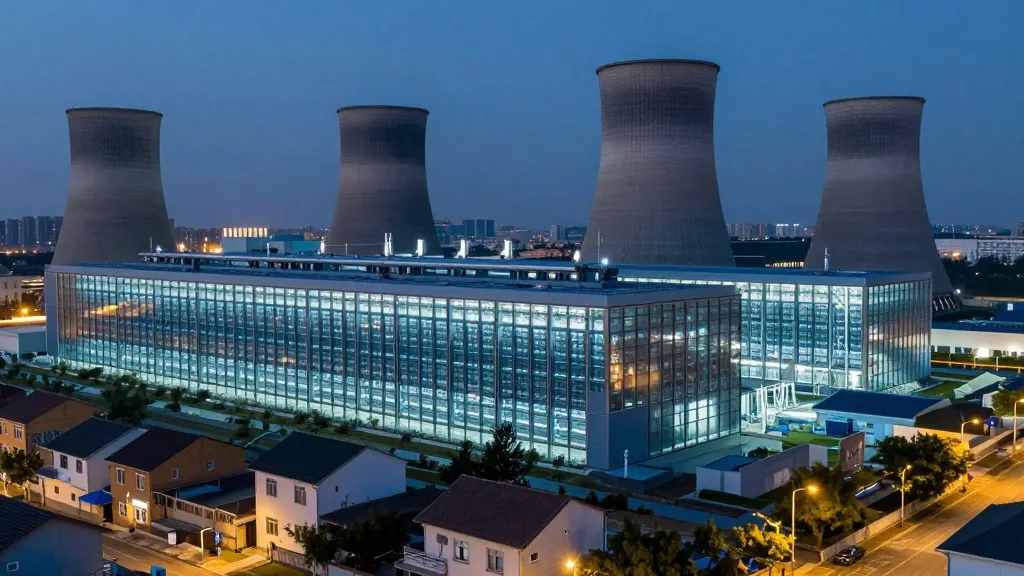
President Donald Trump has outlined a new framework for the rapidly expanding artificial intelligence infrastructure, calling for data center operators to provide financial or energy benefits to the communities hosting them. In a recent post on Truth Social, the President suggested that these facilities should not only generate their own electricity, a previous requirement of his administration, but also return the surplus power to local grids. The goal is to create a direct benefit for residents, potentially stabilizing or even lowering their monthly energy costs in exchange for hosting these massive computing hubs.
This proposal arrives as friction grows between AI hyperscalers and the small towns where their facilities are being constructed. Residents across the United States have increasingly voiced opposition to these projects, citing a range of local impacts. The primary complaints include a sharp rise in electricity prices, persistent noise pollution from cooling systems and generators, and significant strain on local water resources. Additionally, concerns about air quality, deforestation, and general ecological disruption have made data centers a contentious topic in many municipal planning meetings.
The administration’s strategy appears to be a two-pronged approach to winning back public favor while maintaining a competitive edge against China in the AI sector. By mandating that companies share the spoils of their energy generation, the government hopes to make the presence of data centers more palatable to local populations. The logic is that if the excess electricity produced by these facilities is sold back to the local grid or used to offset community costs, the burden on individual households will be reduced. This aligns with a recently passed act that requires data centers to cover the costs of necessary grid upgrades, preventing those expenses from being passed on to local taxpayers.
Trump emphasized the economic incentive in his message, noting that data centers which were once unpopular in certain areas became popular once a financial agreement was reached. He urged industry leaders to 'MAKE DEALS' to accelerate construction, suggesting that a clear financial benefit for the community can smooth the path for new projects. The administration views this as a way to balance the national need for advanced computing power with the local need for economic stability and lower utility bills.
However, the mechanics of how these 'dividends' will work remain undefined. The term 'dividend' typically refers to payments made by profitable companies to shareholders. Since many new data center builds are still in the phase of recouping high construction costs, it is unclear how they will generate surplus value for immediate distribution. Furthermore, the type of power generation currently being installed to meet short-term demands is often gas-powered. These generators can be noisy, inefficient, and polluting, which may complicate the narrative of providing a clean or beneficial service to nearby residents who are already sensitive to industrial impacts.
Critics point out that while the financial aspect of the proposal addresses one major pain point, rising electricity costs, it does not solve the broader environmental issues. Issues such as enormous water consumption, land use, and pollution remain significant challenges. For many communities, a small reduction in their power bill may not be enough to offset the daily realities of living next to a large industrial facility. The 'dividend' concept may therefore be seen as addressing only a fraction of the total burden these centers place on local infrastructure.
There are also questions about the long-term viability of this model. If the energy sharing is done through the grid, the benefits might be diluted across a wider area rather than concentrated in the immediate vicinity of the data center. Conversely, if it is a direct financial payment, the amount may need to be substantial enough to truly change public perception. The administration has not yet detailed the specific mechanisms for calculating or distributing these benefits, leaving room for interpretation by both the tech companies and local governments.
The proposal also intersects with existing regulations regarding grid upgrades. By ensuring that data centers pay for the infrastructure needed to support their high power draw, the administration aims to protect local ratepayers from unexpected cost increases. This, combined with the potential energy dividend, forms the core of the new policy direction. It represents a shift from viewing data centers solely as industrial consumers to viewing them as potential contributors to the local energy economy.
As the AI arms race continues, the need for computing power shows no signs of slowing. The challenge for the administration and the tech industry is to translate this high-level mandate into concrete, fair, and effective local agreements. Whether this 'energy dividend' model will become the standard for new AI data center projects remains to be seen, but it sets a new tone for the relationship between big tech and the communities that host them.
For now, the focus is on whether this financial incentive will be enough to turn opposition into acceptance. The next few months will likely see more negotiations between hyperscalers and local officials, as they work out the details of how excess energy will be shared and what form the dividends will take. The outcome of these negotiations will be a key indicator of how successfully the administration can balance technological progress with community welfare.
Source: Tom's Hardware · original report published