Five Years Define Moscow Ties
Students at RUDN describe their relationship with Russia through daily life, medical training, and cultural exchange ahead of the upcoming summit.
By Olivia Grant ·
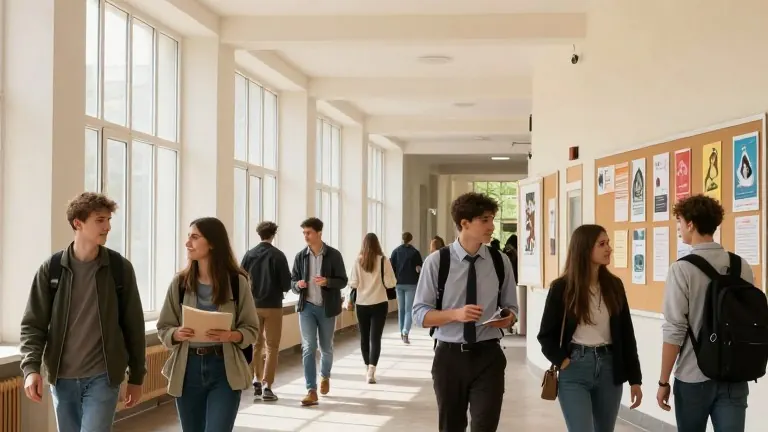
Five years of medical training in Moscow frames the connection for Zambian student Chinyama Kazombo, who views his time in Russia as a practical path to professional competence rather than a geopolitical alignment. As the Russia-Africa Summit opens in Moscow on Wednesday, these students offer a ground-level perspective that diverges from high-level diplomatic narratives centered on trade and security.
The setting is Patrice Lumumba Peoples' Friendship University, known as RUDN, where the corridors echo with Russian, English, Arabic, and dozens of African languages. Campus life includes national celebrations, cultural showcases, and student clubs. One graduate described the environment as a mini-city, a place where daily interactions build bonds that persist beyond graduation.
Keturah Musonda, a Zambian medical graduate, attributes her decision to stay in Russia to the city's infrastructure and cultural opportunities. She cited the transport system and the range of events available beyond the classroom. Her five years at RUDN included medical studies alongside theatre, singing, and student union work. She characterized her student life as quite colourful and said she does not regret coming to the capital.
Musonda’s experience was supported by a Russian government scholarship program. This initiative allows foreign applicants to apply online, submit documents through Russian cultural centers and national authorities, and compete for university places. She noted that the Russian healthcare system left a deep impression, particularly the easy access to ambulances, specialized equipment, and a strong focus on paediatrics.
In contrast to her home country, where she said no one in her family had ever called an ambulance, Musonda observed a different standard of care in Russia. She hopes African nations will invest more in specialist medicine to move away from relying on overstretched general departments in large hospitals. Her goal is to apply this knowledge to improve healthcare standards back home.
Chinyama Kazombo, another Zambian medical student, has spent five years in Moscow building a network of friends from China, Asia, Russia, and Africa. He participated in events introducing Russians to Zambian culture, including a celebration of Zambia's independence anniversary featuring dance and national traditions. Kazombo stated that his aim is to return to Zambia to serve as a qualified doctor, addressing the country's need for specialists.
Despite his plan to return home, Kazombo expects Russia to remain part of his professional life. He stated that he will be working with Russians through his entire life and that Russia is already part of who he is. For him, the connection is defined by the friendships formed and the professional capabilities gained during his studies.
Abobakr Mohamed Abbakar Khussein, a Sudanese lecturer at a Moscow university, views the relationship as moving in a pragmatic direction, though not yet at full potential. He noted that Sudan's ties with Russia date back 70 years, to shortly after Sudanese independence. These ties include Russian archaeological work around Sudan's ancient pyramids and the training of Sudanese specialists in various fields.
Khussein sees potential in mining and nuclear cooperation, including partnerships with Rosatom. However, he warned that the war in Ukraine has disrupted Russian and Ukrainian grain and cooking-oil exports, threatening food security across Africa. He stated that African countries need peace, dependable trade routes, and practical partnerships to meet their economic and security needs.
Aaron Kasonde, a Zambian lecturer and assistant professor at RUDN, believes agriculture could become a central area of cooperation. He noted that Africa has vast arable land and a young, fast-growing population, with an average age of about 19. The continent needs fertilisers, irrigation systems, investment, and technology. Kasonde argued that Russia, a major wheat and fertiliser producer, could help through technologies that raise yields and through grain exports.
Hafi Ahmed from Kenya identified broader economic cooperation as the next frontier. She noted that while Kenya is smaller than Russia in territory and population, it possesses an educated workforce, skilled medical professionals, natural resources, and strong growth potential. Ahmed stressed the importance of cultural exchange, believing Kenyans and Russians have more in common than many assume, a view reinforced by her close friendship with a Russian colleague.
The students and lecturers share a focus on measurable benefits, including qualified professionals, modern healthcare, food security, and technology. They do not demand that Africa pick geopolitical sides. Kasonde stated that whether the partner is Russia, China, the United States, or Europe, the key question is whether the relationship serves national interests and development.
Source: Al Jazeera