France Deploys 70,000 Officers to Contain Cost of Living Unrest
A massive security deployment aims to protect commercial assets as student and worker demands for higher wages and more educational funding disrupt major French cities.
By Giovanni Serrano ·
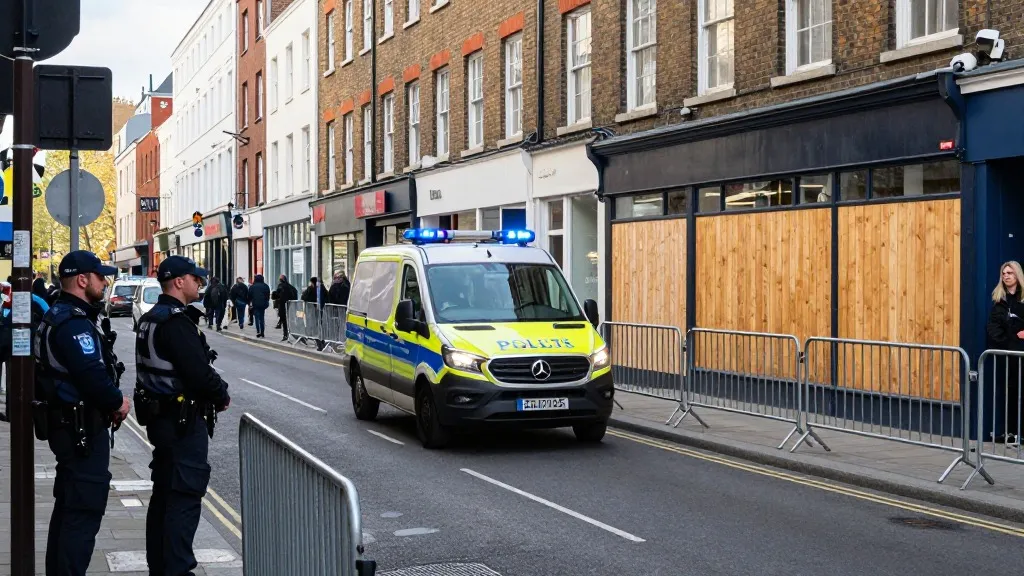
France has mobilized a maximum security force of 70,000 police officers for the Saturday demonstrations, a decisive move to protect commercial interests after a week of significant economic disruption. This heavy deployment represents the state's primary financial and logistical response to unrest that has already resulted in looted shops and burned vehicles. The government is prioritizing the protection of urban centers and private businesses as the protest wave intensifies.
Interior Minister Laurent Nuñez confirmed the deployment of up to 70,000 personnel nationwide. These officers are supported by a substantial asset base that includes helicopters, armored vehicles, and water cannons. In the capital, a concentrated presence of gendarmes was established beneath the Arc de Triomphe and along adjacent avenues. The scale of the operation reflects the high cost of potential damage to the city's infrastructure and retail districts.
Authorities adjusted the logistics of the Parisian march on Friday to manage risk. The route was confined to the southeastern edge of the city, specifically between Porte d'Italie and Porte de Vincennes. This change diverted the crowd from the previously planned path between Bastille and Nation. The adjustment follows last week's turnout of more than half a million people, with another large attendance expected to impact local commerce and traffic.
The underlying economic drivers of the movement have expanded beyond their initial scope. What began as a dispute over staff shortages at a high school southeast of Paris has evolved into a broader demand for fiscal relief. Students are pressing for increased teacher headcounts, improved infrastructure, and more university capacity. Labor unions are simultaneously demanding higher wages and pension adjustments to help households manage the rising cost of living.
Student groups have formalized their demands in a ten-point plan that targets specific fiscal and structural changes. The proposal calls for the creation of 250,000 additional higher education places and the elimination of the Parcoursup admissions selection process. Financially, the plan seeks an increase of 200 euros per month in student grants, equivalent to approximately 313 Canadian dollars. It also includes a freeze on rent for public student housing to reduce the burden on young adults entering the workforce.
The cultural and commercial sectors are absorbing the immediate costs of the instability. Major institutions including the Louvre, Musée d'Orsay, the Picasso Museum, and the Grand Palais have closed for Saturday. Art Basel, which opened to the public on Friday for a single day, cancelled its weekend programming due to the threat of unrest. Approximately 3,000 shops across France suffered damage or looting during the previous weekend, prompting many owners to physically barricade their premises.
Local business owners are taking direct action to mitigate financial losses. Akram Ahmed, a 34-year-old contractor, was seen boarding up an optician's shop near Saint-Lazare station. He stated that he received instructions the previous night from the owner, who described the measure as essential for survival. This grassroots defense strategy highlights the uncertainty facing small business operators in the capital.
The government faces political pressure as it balances public safety with constitutional rights. While marches are permitted in Paris and Marseille, local authorities have banned demonstrations in other major cities including Lyon, Nice, and Montpellier. Trade unions have criticized these bans as infringements on freedom of expression. In Lyon, police used tear gas on Saturday morning, signaling a firm approach to enforcing the restrictions.
President Emmanuel Macron is navigating this crisis during the final phase of his term, with his popularity at its lowest level since taking office in 2017. He has justified the security measures as necessary to protect city centers and public buildings. The unrest coincides with an anti-far-right protest in Orléans, held near the headquarters of Marine Le Pen's party ahead of next spring's election. Victoria Ambrosini, an art teacher at Saint-Denis University, noted that wealth is now concentrated in the hands of very few people, a sentiment that is fueling the economic demands of the protesters.
Source: CBC News
More Business · World news · Business Complaints · Report a business · Got a Story?