French Streets: Mass Marches Challenge Government on Schools and Security
Hundreds of thousands of citizens took to the streets across France on Saturday to demand better school conditions and fairer policing, marking a significant escalation in the ongoing social crisis.
By Olivia Grant ·
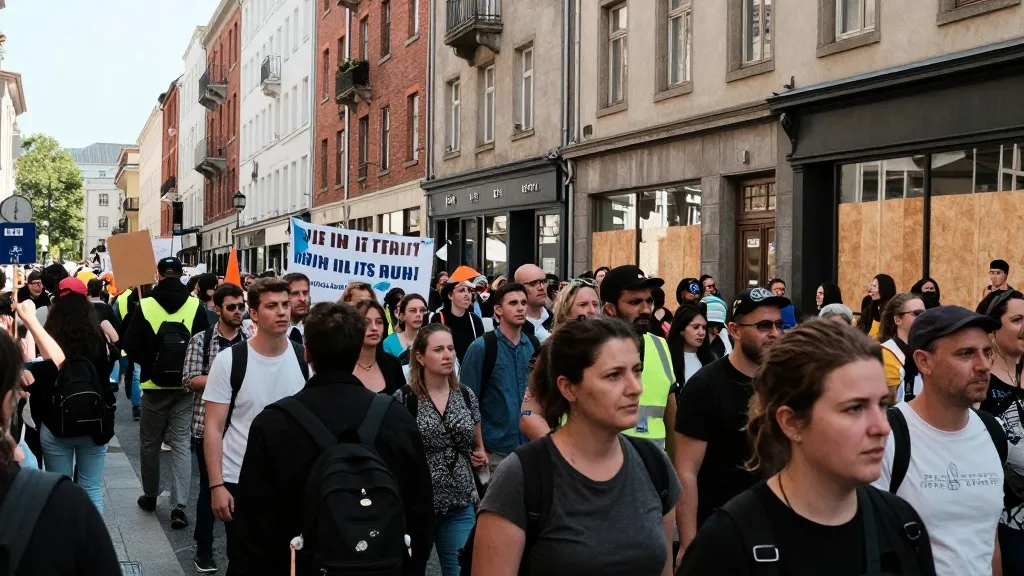
For ordinary families across France, the weekend brought a tangible shift in the daily rhythm of city life. With shops boarded up and major museums closed to protect collections, the streets became the primary stage for a political conversation that had been simmering for months. The day began with a sense of communal purpose as hundreds of thousands of people gathered in cities nationwide. They marched not just to voice grievances, but to demand that the government prioritize the basic needs of their children, from adequate classroom resources to safer public spaces. The atmosphere in many areas was one of determined optimism, with participants hoping to break the cycle of recent unrest through collective, peaceful action.
The scale of the mobilization was substantial. Government officials estimated that at least 400,000 people participated in the marches, a figure that trade unions claimed was actually double. To manage the crowds, more than 70,000 police officers were deployed across the country. In Paris, the government counted at least 110,000 marchers moving along the eastern edge of the city. The participants included high school students, but also a broad coalition of adults who felt the weight of the high cost of living and what they described as heavy-handed law enforcement tactics. Many carried banners that read "Oppression breeds rebellion" and "The right to protest," signaling a desire for political solutions rather than just police presence.
The background of this movement traces back to mid-September, when students aged fifteen to eighteen first began protesting. Their initial complaints were practical: staff shortages, leaking roofs, crumbling structures, and a lack of chairs in overcrowded classrooms. What started as a specific educational grievance has evolved into the largest youth movement in years. Trade unions, teachers, and parents have joined the ranks, transforming the issue into a broader social crisis for President Emmanuel Macron in the final months of his term. Police investigations are currently underway following reports that some children and protesters were injured by explosive police weaponry, adding a layer of urgency to the demands for reform.
Reactions from those on the ground reflected a mix of resilience and frustration. Nadège, a 43-year-old communications worker who had been teargassed during the previous weekend's protests, returned to the streets to stand in solidarity. She noted that it takes courage to demonstrate now, as many people are afraid. "In France, it's our legal right to protest in the street and I'm here to defend that," she said. A 21-year-old science student from a blockaded Paris faculty expressed a similar sentiment, feeling that the country is living in an increasingly authoritarian regime that seeks to suppress democratic rights. Jérôme Rodrigues, a prominent figure from the 2018 and 2019 gilets jaunes movement, observed that the government's strategy of pushing demonstrators to the city edges reveals a fear of public power.
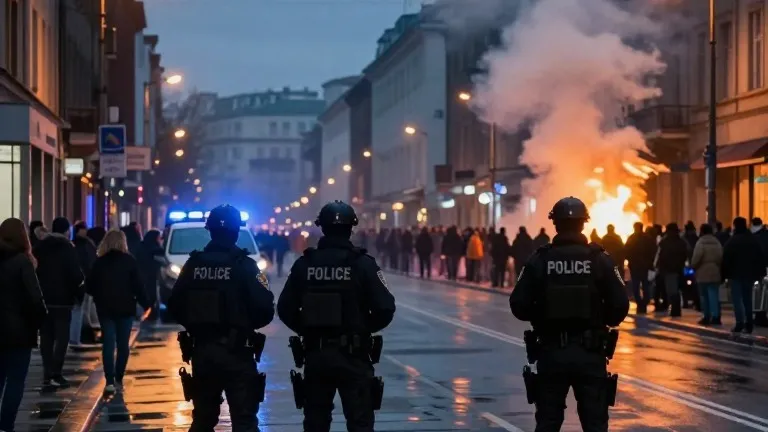
Despite the largely peaceful tone, tensions did flare in certain locations. In Paris, groups of masked men dressed in black, who did not appear to be part of the main peaceful march, threw glass bottles and stones at officers at Porte de Vincennes. Police responded with teargas, water cannon, and stun grenades. Similar clashes occurred in Marseille, where bin fires were lit, while teargas was used in Lyon, Lille, Montpellier, Nantes, and Toulouse to keep protesters from reaching city centers. The government had feared a repeat of the previous Saturday, which saw one of the most violent days of unrest in years, with public buildings burned, hundreds of shops destroyed, and at least 2,700 people arrested.
The marches also intersected with the upcoming presidential election cycle. In Orléans, thousands of protesters chanted anti-fascist slogans against a congress held by Marine Le Pen's National Rally party. The crowd shouted, "Macron, resign. Le Pen in prison," highlighting the dual frustration with the current administration and the far-right opposition. Le Pen remains a frontrunner for next year's election, and the demonstrations have added a layer of complexity to the political landscape. Participants like Pierre, a 60-year-old retired banking consultant, marched for his young granddaughter, citing the government's refusal to listen to public demands. Jesse, a charity worker, prepared carefully for the march, wearing old clothes in anticipation of potential teargas or torn clothing.
What happens next remains a key question. Jérôme Rodrigues suggested that demonstrations are likely to continue every weekend, signaling that the movement is not a one-day event but an ongoing pressure campaign. The interior minister, Laurent Nunez, reported that 135 people had been arrested across France. Confiscated items included metal balls, lead pellets, fireworks, slingshots, steel balls, improvised weapons, a katana sword, and airsoft weapons. As the government seeks to balance its desire for order with the public's demand for accountability, the coming weeks will likely see continued testing of the relationship between the state and its citizens.
The visual landscape of the day was marked by both unity and preparation. Some demonstrators wore yellow vests, a nod to the anti-government protests of 2018 and 2019. The presence of brass bands and children in the crowds in Paris contrasted with the tactical gear of the police and the makeshift shields of protesters. For many, the march was a reaffirmation of personal responsibility and civic duty. They stepped into the streets not as a political bloc, but as individuals exercising their right to be heard, hoping that their collective voice would force a change in how the government approaches education and public safety.
Source: The Guardian