Lakshmi Aguirre argues the Spanish daily lunch menu is fading but not gone
A new book by a food journalist traces the history and current economic pressures on the traditional set-price lunch that remains a staple of working life in Spain.
By Olivia Grant ·
Lakshmi Aguirre, a Spanish food journalist, has published a new book that examines the current state of the menú del día, the daily set-price lunch that has been a fixture of the country's working week for decades. In her work, Menú del Día: Everyday Scenes of a First Course, a Second Course and Pudding, she traces the history of the tradition while assessing its future. Her central argument is that while the institution is facing significant challenges, it is not yet finished, contradicting earlier predictions that it had already disappeared.
The practice involves a fixed-price meal typically consisting of a starter, a main dish, and a dessert or coffee, with bread and a drink included. Approximately four million of these meals are still served on working days across Spain. Although the habit is slowly losing ground to other dining options, it remains a significant part of the national food culture. The format provides a predictable and affordable option for workers who need a quick but substantial meal during their midday break.
The origins of this tradition are rooted in government policy rather than organic market development. The menu began in the mid-1960s as a specific initiative by Manuel Fraga, who served as the information and tourism minister under dictator Francisco Franco. Following the post-civil war period known for food scarcity, the regime aimed to demonstrate to foreign visitors that Spanish food was plentiful, high-quality, and affordable. Establishments were legally required to offer a soup starter, a main course chosen from at least three options of egg, fish, or meat, and a pudding based on fruit, sweet items, or cheese.
The state also controlled pricing and quality to protect the integrity of the offering. Prices were fixed between 50 and 250 pesetas. To prevent restaurants from diluting the accompanying drink, the law mandated that the quarter-litre of wine served with the meal must be a pure, clean, and pleasant Spanish red or white with an alcohol content of at least 12 percent. In the early 1970s, the offer was renamed to make it appear less like a tourist trap and to encourage local residents to use the service for their own daily meals.
Today, many Spaniards are unaware of the menu's governmental origins. Aguirre noted that during her research, many people reacted with shock when she mentioned Fraga. She described this quick forgetting as a reflection of Spanish society, adding that nostalgia for the tradition is growing as people realize it is fading. She views the menu as a historical record that has mirrored the evolution of the country.
Several economic and social pressures are currently testing the sustainability of the menu. The average price has risen to €14.70, making it less competitive against other quick lunch options. Many workers, short on time, now choose to bring food from home or microwave ready-made meals from supermarkets. For small, family-run restaurants, rising energy and food costs make it difficult to maintain a rotating daily selection. Some establishments have responded by simplifying their offer to a single dish of the day, while others have added Latin American staples to reflect the changing demographics of their customer base.
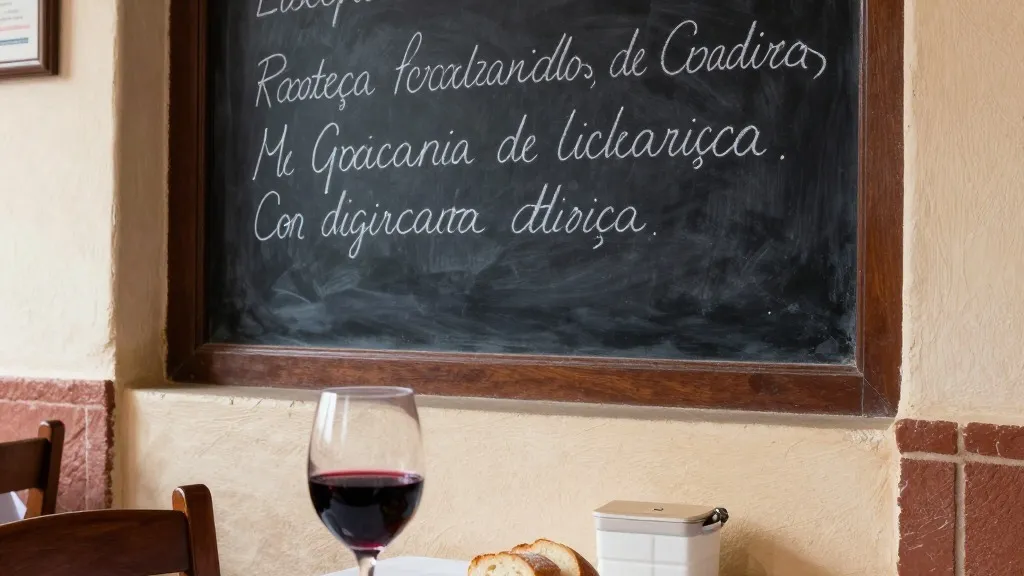
Aguirre accepts these changes, arguing that the menu has always reflected the society that eats it. Her personal ideal for the format includes simple dishes such as a vegetable stew, hake in green sauce, or baby squid in ink, followed by traditional desserts like rice pudding or fried milk. She evaluates venues based on specific criteria, including a regularly changing menu, non-frozen chips, and a chorus of regular customers. She notes that a chalkboard free of trendy words like avocado or truffle is a positive sign, and bonus points are awarded if the owner’s child is doing homework at a table in the back.
For Aguirre, the significance of the menu extends beyond the economics of a cheap meal. She describes it as a vital social meeting point where families with limited means can eat out and individuals living alone can find company. The true privilege of the menú, she argues, lies not just in the ability to pay for the food, but in having the time to enjoy it. As eating habits shift and costs rise, the future of this institution depends on its ability to remain both affordable and relevant to modern workers.
Source: The Guardian
More Business · World news · Business Complaints · Report a business · Got a Story?