North Korea's Drone Push Forces South Korea to Rebuild Defense Strategy
Pyongyang has launched a massive drone production effort with Russian support, prompting Seoul to test a new hypersonic weapon in response.
By Giovanni Serrano ·
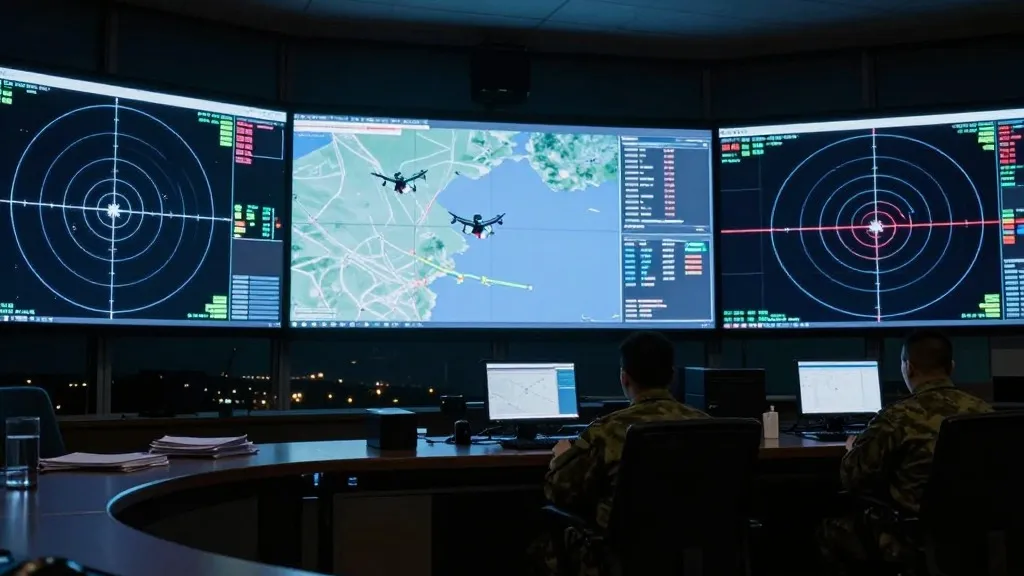
A new level of tension has emerged on the Korean Peninsula as North Korea ramps up its military capabilities. The country is now mass producing attack drones while significantly improving the precision of its ballistic missiles. This rapid advancement is not happening in a vacuum. It is the direct result of a deepening military partnership with Moscow. The exchange involves a complex trade of technology, personnel, and hardware between the two regimes.
The numbers in this story are striking and concerning for regional observers. In early October, Pyongyang tested a tactical ballistic missile. South Korean and Japanese analysts estimate the weapon traveled approximately 700 kilometers. North Korea claims the range was actually 1,000 kilometers. The missile is designed to carry a nuclear warhead. Meanwhile, reports suggest up to 25,000 North Korean workers are now employed at Russian military facilities. These workers are focused on producing military drones, particularly at sites in Tatarstan.
The human element of this alliance is becoming increasingly visible. President Lee Jae Myung watched the test firing of a South Korean hypersonic ballistic missile five days after the North's launch. This was the first time Seoul conducted such a test. The act served as a clear signal of growing unease in the South. Analysts note that the North Korean side is gaining valuable insights from the field. Anton Ponomarenko points out that access to Russian deployment data has allowed Pyongyang to refine its weapons. This has made the threat to the South more substantial and difficult to counter.
The stakes are rising for South Korea and its allies. North Korea has observed how inexpensive drones can overwhelm expensive air defense systems in recent conflicts in Ukraine and the Middle East. Last month, the North conducted a drill where a swarm of drones attacked an island target. Simultaneously, cruise and ballistic missiles struck the same location from different angles. This combined tactic is designed to confuse and saturate defense networks. The result is that South Korea and its partners may soon be forced to redesign their air defense systems. That process will likely come at a high financial cost.
This development follows a series of recent reports on the Russia North Korea partnership. In September, it was revealed that North Korean citizens are producing drones for Russia. Additionally, a North Korean missile unit is deploying in western Russia. This unit could be equipped with 120 ballistic missiles and six launchers. In August, Moscow requested KN-30 ballistic missiles from Pyongyang. Earlier this year, in June, the North announced tests of a modernized 240mm multiple launch rocket system and a 155mm long range artillery shell. The trajectory of these capabilities suggests a continued and accelerating shift in the regional balance of power.
Source: Ukrainska Pravda