SpaceX Halts New Falcon 9 Sales, Shifting NASA's Launch Strategy
The private firm is withdrawing from key government contracts, forcing the space agency to rely more heavily on Boeing and other providers.
By Giovanni Serrano ·
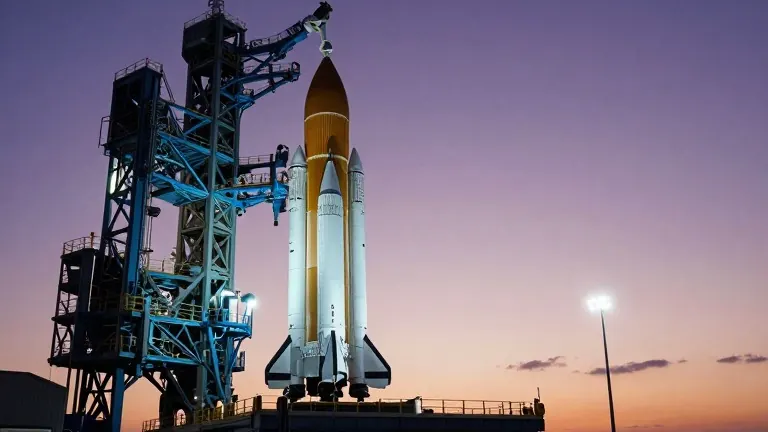
SpaceX has told the National Aeronautics and Space Administration that it will stop flying its Crew Dragon spacecraft to the International Space Station by or before 2030. This move marks a decisive break in a relationship that defined American space policy for the past twenty-five years. The decision forces NASA to accelerate its reliance on Boeing, which was originally developed as a competitive alternative to SpaceX.
Gwynne Shotwell, the longtime SpaceX executive, explained the shift in September. She stated that NASA should let Boeing handle astronaut transportation. She noted that the government paid substantial sums for Boeing's capsule and that the company deserved the opportunity to operate it. Shotwell said, “We’re just gonna let them have some business.”
Space executives previously viewed federal agencies as essential customers. Elon Musk and Shotwell spent decades navigating regulatory hurdles and competing with established aerospace giants like Lockheed Martin and Boeing. They secured contracts by delivering hardware at lower costs and higher quality than their rivals. That dynamic has now reversed. SpaceX no longer needs the government as a primary source of revenue.
The company is retreating from several commercial and government sectors simultaneously. In October, SpaceX stopped selling commercial launches on its Falcon 9 rocket for missions scheduled after 2028. The firm is also reconsidering its role in NASA's lunar programs. Three sources indicated that SpaceX recently informed companies building small landers for the Moon Base that it will not provide launch services for their payloads.
Military contracts show similar patterns. Last week, reports indicated that SpaceX told the US Space Force it would not bid on three new launch contracts planned for the late 2020s. These contracts would have exceeded the firm's existing commitments to the military. Kent Rominger, a member of NASA's Safety Advisory Panel, noted during a late October meeting that if a US Deorbit Vehicle launches to the station after 2030, it may require a rocket other than the Falcon 9.
Lori Garver, a deputy NASA administrator during the Obama administration who helped expand commercial space contracts, described the situation as a pending divorce. She admitted to being in denial about the separation. Garver said she cannot yet conceptualize a future where SpaceX stops flying its Dragon and Falcon vehicles. The agency is now investing more heavily in Boeing to maintain its astronaut transport capabilities.
SpaceX remains active in specific areas, such as Starshield, a service providing military communications and observations. However, for most other government work, the private firm is increasingly disinterested in bidding. The pendulum of influence has swung from a government that needed commercial partners to a contractor that can dictate the terms of engagement.
Source: Ars Technica