Trump's Ukraine Deal and Iran War Test Midterm Voters
Polls show 70% disapproval of the president's handling of the economy and conflict, while Ukrainian Americans in Pennsylvania vow to break party lines in the Nov. 3 vote.
By Giovanni Serrano ·
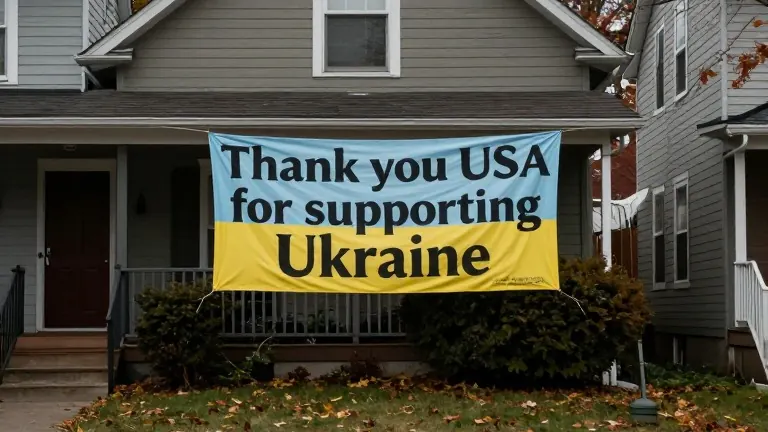
American voters face a November election defined by high fuel costs and diplomatic friction. The current political climate pits the president's foreign policy decisions against household budgets. Polls indicate that roughly 70% of respondents disapprove of the administration's management of the economy and the war in Iran.
In Jenkintown, Pennsylvania, Ukrainian Americans are preparing to shift their votes. Irene Skulsky, a retired teacher in her late 70s, told a gathering of the Ukrainian American Senior Citizens Association that she will vote against her traditional party. She cited a recent Russian drone strike in Kyiv that killed several people in cars ahead of her son, Darko. Skulsky said the lack of an early warning system, attributed to suspended US intelligence sharing, motivated her to change her ballot choice.
"When we vote, we have to vote with Ukraine in our hearts," Skulsky said. "I know many people here are Republicans, but we can’t go according to party lines now. Ukraine needs us. They need our support. We need to shift the balance of power in Congress and in the Senate."
The administration's strategy has included a deal with Russia to purchase nearly 5 million tonnes of diesel. This move overrides US sanctions on Moscow. It also follows the president's call for Ukraine to replace its leader, Volodymyr Zelenskyy. Economists argue the diesel volume is too small to lower prices, which have risen primarily due to the conflict in Iran. The closure of the strait of Hormuz has cut off one-fifth of global energy supplies, raising costs for petrol and diesel in the United States.
Trade tensions have added to economic pressure. After bilateral talks collapsed, the administration imposed tariffs on $20 billion of Canadian imports. This includes cars, forestry products, and dairy. Mark Carney, the Canadian prime minister, has led a retaliatory response. In Michigan, Republican Senate candidate Mike Rogers ran an ad stating, "Canada is not our enemy." The tariffs have increased costs for manufacturers using imported steel, copper, and aluminum.
The president has named his strategy the "Donroe doctrine." He outlined this vision in a speech in Corpus Christi, Texas, where he referenced a tanker carrying 1 million barrels of oil. He described the goal of extracting resources from Venezuela, a nation from which the US ousted President Nicolás Maduro in January. This approach follows a pattern of direct negotiation with autocratic leaders, including a recent meeting with Chinese President Xi Jinping.
In Philadelphia, which has the second-largest population of Ukrainian descent in the US, roughly 60,000 people trace their heritage to the region. Peter Hewuka, an 88-year-old retired nuclear physicist and lifelong Republican, said he plans to vote for a local Democrat. "I am very hesitant to vote Democrat. I’m a lifelong Republican," Hewuka said. "But I can’t vote for people who support what Trump is doing. The Republican party has left us, we haven’t left the Republican party."
Andrij Chornodolsky, chair of the local senior citizens association, urged members to contact the White House to criticize recent policy moves. He described the administration's actions as helping Russia subjugate Ukraine. "What are the comments coming out of Congress?" Chornodolsky asked. "Silence speaks very loudly. If you do nothing, you agree with the person making the pronouncements."
Source: The Guardian