French Authorities Deploy 70,000 Officers to Contain Second Weekend of Economic Unrest
Police arrested 135 individuals and seized varied weaponry as nationwide demonstrations over living costs continued despite heavy security measures.
By Petra Garnier ·
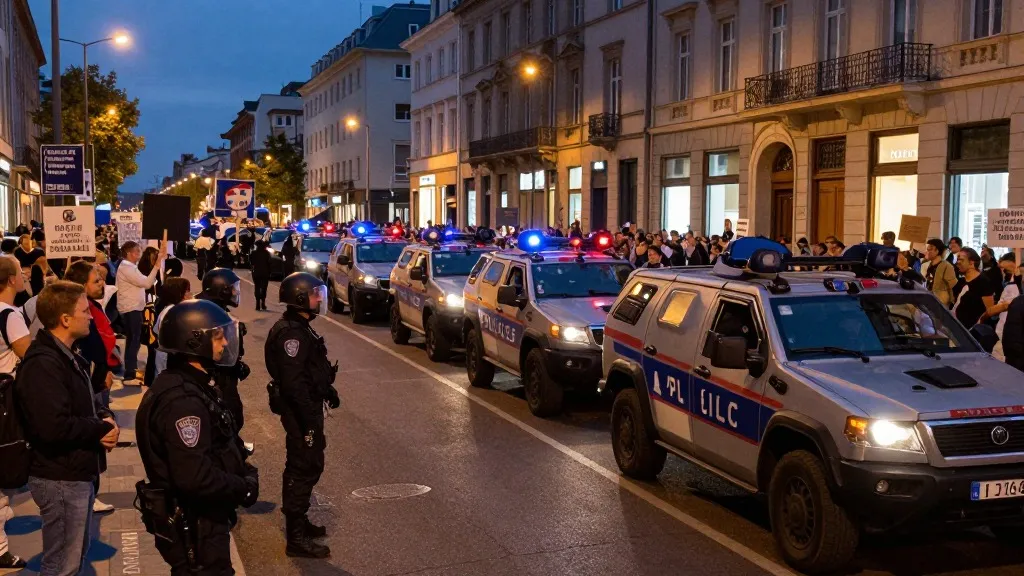
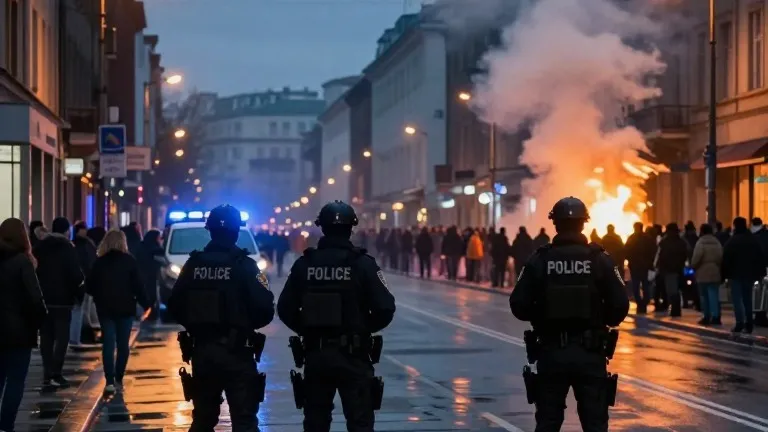
The tension between France’s government and its citizens escalated sharply on Saturday as authorities attempted to prevent a recurrence of the previous weekend’s chaotic protests. Interior Minister Laurent Nuñez confirmed that 135 people had been detained and a significant haul of weapons was seized, ranging from slingshots and lead pellets to a katana and airsoft guns. While the minister described the overall situation as free of major incidents, the deployment of up to 70,000 officers, supported by helicopters, armored vehicles, and water cannons, signaled a defensive posture by the state. This heavy-handed approach was designed to manage a turnout that was expected to rival the more than half a million participants seen the prior week.
In Lyon, where demonstrations had been officially banned, the friction between protesters and police was immediate. Approximately 150 demonstrators attempted to block a central road, prompting officers to deploy tear gas. A 21-year-old student, speaking anonymously to Agence France-Presse, noted the agility of the police response. He stated that officers were really mobile, often dispersing marches before they could fully form. This proactive tactic highlighted the government's intent to limit the scale of public gatherings in major urban centers.
The political stakes were particularly high in Orleans, where thousands marched against a congress of Marine Le Pen’s National Rally party. Le Pen is using this event to launch her campaign to succeed President Emmanuel Macron, with elections only six months away and polls showing her as the frontrunner. Demonstrators targeted both the sitting president and the challenger, chanting that Macron should resign and Le Pen should go to prison. While police counted 11,000 participants, organizers claimed the number reached 26,000. The protest, which involved about 50 groups including unions and student organizations, ended peacefully in the early afternoon, though the congress continues through Sunday.
In Paris, authorities described the atmosphere as calm, though the location of the authorized march was a point of contention. Originally planned for the Bastille, the event was moved at the last minute to the Porte d'Italie on the city’s southeastern edge. Union representative Murielle Guilbert called the decision scandalous, arguing that wages have not risen to the level they should and that Macron has barred protesters from demonstrating where they wish. Lucas, a student, told CBS Saturday Morning that it is normal for people to be angry. The shift in venue reflects a strategy to contain the visible impact of the protests on the capital’s iconic landmarks.
The economic and social disruption in Paris has been significant, with major museums closing and many businesses boarding up their windows. The art world felt the impact as well, with Art Basel opening for only one day before its weekend program was cancelled. Sports events also faced adjustments, as the first NFL game in France involving the New Orleans Saints remains scheduled for Sunday, though some venues were shut on Saturday. Additionally, a soccer match between Paris Saint-Germain and Olympique Lyonnais was moved from Sunday to Monday night to avoid peak protest hours. These logistical changes underscore the extent to which the unrest has infiltrated daily life.
The current wave of protests stems from initial demonstrations by high school students in southeast Paris last month, which quickly broadened into a national demand for relief from rising living costs. The Yellow Vests, a movement that emerged eight years ago to disrupt governance, have announced further actions for October 31. They plan rallies and a sit-in outside parliament and city halls, criticizing what they term the authoritarian drift of the government. This sustained pressure suggests that the conflict over economic policy is far from resolved.
The unrest has also rippled across Europe, affecting other major cities. In Milan, Italy, additional soldiers were deployed following looting and clashes, and Premier Giorgia Meloni announced tougher penalties for minors, who police said constituted a large portion of the violent crowd. In Tirana, Albania, riot police used water cannons on students protesting high tuition and corruption in education. Meanwhile, thousands of retirees marched in Madrid regarding pension issues, and a housing protest was anticipated in Lisbon. These parallel movements indicate a broader continental trend of public dissatisfaction with economic conditions.
Source: CBS News