Jerusalem's Economic Strain: A Warning for the Nation
A veteran diplomat argues that the social and economic tensions currently visible in the capital are beginning to mirror conditions across the broader country.
By Petra Garnier ·
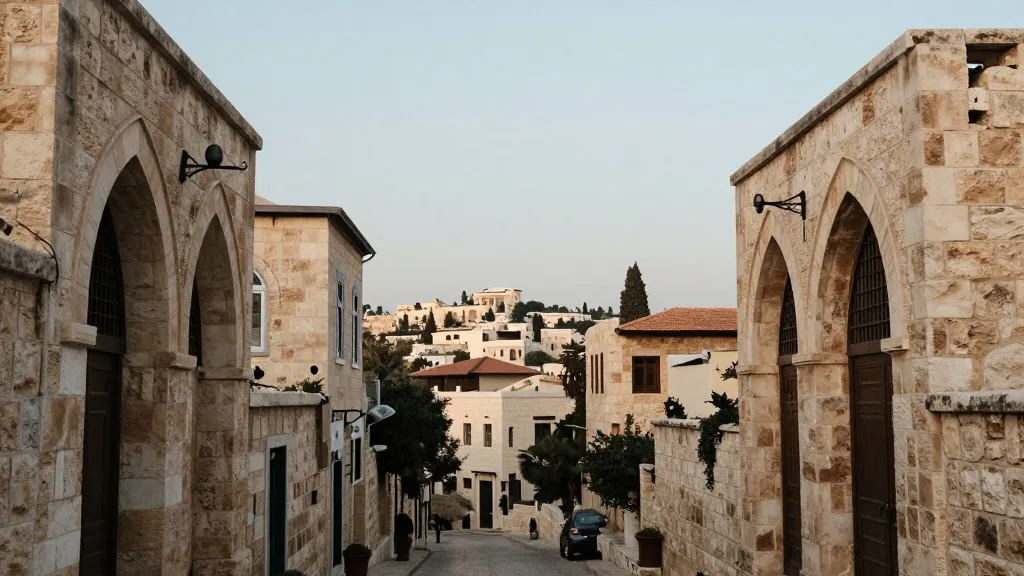
For families across Israel, the economic and social pressures once thought to be unique to Jerusalem may now be a national reality. This is the central warning issued by Esti Ayalon Kovo, a Jerusalem resident and former head of Israel's Economic Mission in China. As the 2026 Knesset elections approach, Ayalon Kovo, who is running in the 21st slot on the B'Yachad list led by Naftali Bennett, argues that the specific challenges facing the capital are spreading to other parts of the country. She contends that the current political landscape requires immediate and serious repair, effective governance, and thorough plans for basic national challenges.
The path to this political moment began with personal and professional transitions. Ayalon Kovo was born in Ethiopia before immigrating to Israel. Her career in diplomacy was driven by an early desire to represent Israel globally, a interest that grew into an appreciation for the complexity of the field. Her move to Jerusalem was motivated by her children's education. When they were accepted to a local school, the family settled in the Beit Hakerem neighborhood. She describes the city as special and never boring, stating, "I couldn't imagine being anywhere else."
Her political entry is framed by a desire to secure her children's future. Ayalon Kovo explains that she is in the race primarily for her kids, arguing that the country needs decisive action now. She believes that only the B'Yachad party, under Bennett's leadership, can provide the necessary repair and governance. Her assessment of the current political climate is shaped by her time in the capital, where she observed economic and social challenges. Specifically, she noted instances where the interests of the powerful haredi community clashed with those of other residents, creating friction that she now sees on a wider scale.
The trajectory of these issues has moved from a local concern to a national one. Ayalon Kovo points to a lack of leadership that takes responsibility as a primary cause of recent failures. She cites specific events, including October 7 and the flydubai hijacking, as examples of what happens when accountability is absent. These failures have contributed to a growing sense that the state is not meeting the needs of its citizens, particularly those who are not part of the dominant haredi structures.
A key part of her platform involves addressing the emergence of what she calls a haredi state-within-a-state. This structure has developed around military enlistment, education, and workforce participation. Ayalon Kovo argues that this dynamic must be broken up to prevent the troubling economic, educational, and social trends seen in Jerusalem from becoming the norm everywhere. She fears that if this internal division is not resolved, the entire country will face the same social and economic pressures that currently define life in the capital.
The campaign is also positioning itself as a vehicle for change and repair after what Ayalon Kovo describes as a difficult few years. B'Yachad is welcoming those who seek to restore effective governance and preserve Israel's identity as a liberal, Zionist, Jewish, and democratic state. This preservation is the second defining issue of the campaign, alongside the need for responsible leadership. The party is aiming to attract voters who feel that the current system is failing to balance the needs of the whole population with the specific demands of particular groups.
Ayalon Kovo also offers a direct message to olim, or new immigrants, who wish to influence Israeli public life. She encourages them to take an active part in shaping the country rather than observing from the sidelines. "You didn't come here to sit back and watch Israel's story unfold," she said. She emphasizes that getting involved in elections is a good place to start, reinforcing the idea that this is their country and their home. This call to action is part of a broader effort to engage diverse segments of the population in the political process.
As the election season progresses, the focus will shift to how these local dynamics in Jerusalem translate to national policy. Ayalon Kovo's candidacy highlights the growing concern that the capital's social and economic issues are no longer isolated. Her background in diplomacy and her experience in Jerusalem provide a specific lens on these challenges. The coming weeks will test whether voters share her view that the trends seen in the city are a preview of what lies ahead for the rest of the nation.
The interview with Ayalon Kovo was conducted in Jerusalem ahead of the elections. Her comments reflect a broader narrative among some political leaders that the current system requires fundamental changes to ensure stability and growth. As the 2026 campaign moves forward, the debate over how to manage internal social structures and economic disparities will likely remain a central theme for voters deciding on their next government.
Source: The Jerusalem Post
More Politics · World news · Report a business · Got a Story?