NHTSA proposes cyan lights for autonomous vehicles
Federal regulators aim to standardize exterior lighting for driverless cars with a distinct blue-green hue to improve road safety.
By Petra Garnier ·
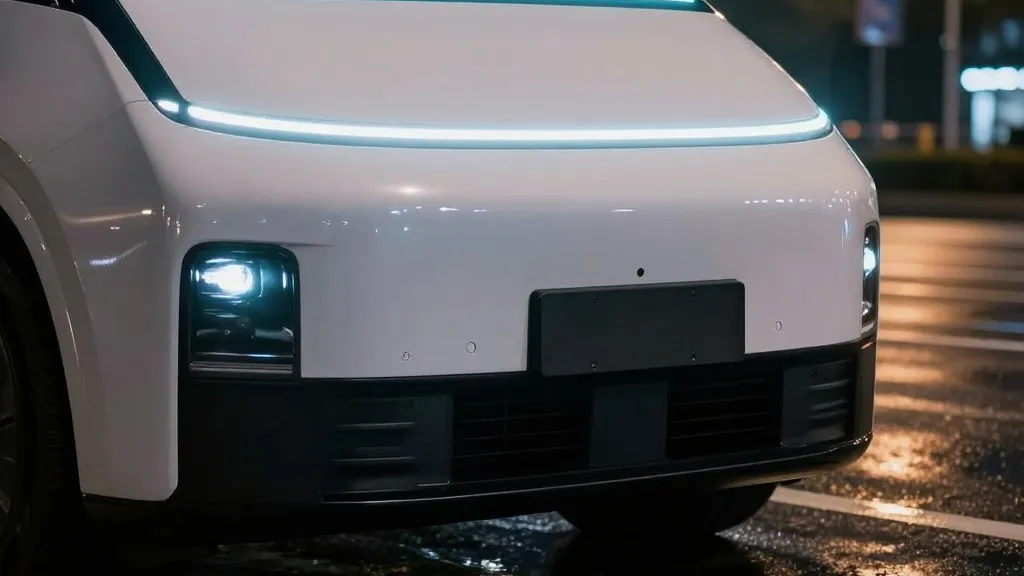
A single shade of blue-green could soon become the universal sign that no human is behind the wheel.
The National Highway Traffic Safety Administration has released a proposal that seeks to standardize how driverless vehicles communicate their operational status to the surrounding traffic. After years of industry debate over the best method to alert other drivers, the agency has settled on a specific color for marker lamps. The goal is to create a clear and consistent signal for law enforcement and other road users when an automated driving system is in control.
The path to this standard has been marked by fragmented approaches and regulatory uncertainty. Previously, automakers considered various methods to indicate autonomous operation, including flashing text displays, audio alerts, and custom light patterns. Each company often developed its own solution, leading to a lack of uniformity on the road. Recent history offers a relevant example, as Mercedes-Benz received state-level approval for turquoise lights on its Level 3 Drive Pilot models. Although the automaker later shifted to a Level 2++ system, that early adoption provided a precedent for using a distinct non-traditional color.
Regulators selected cyan because it occupies an unused visual space in automotive lighting. Current standards rely heavily on red, amber, white, and flashing blue or red lights for functions like braking, signaling, and emergency services. By introducing a blue-green hue, NHTSA aims to fill this gap without causing confusion for drivers who are accustomed to existing color codes.
Under the new proposed rule, the installation of cyan marker lights would remain optional for manufacturers. However, the agency intends to establish strict federal standards for the color, brightness, and placement of these lights. This ensures that if a company like Waymo, Nuro, or Zoox chooses to implement them, the setup will be consistent and legally compliant. The same standard would apply to major automakers such as GM and Mercedes, preventing a chaotic mix of different signals.
Beyond adding new lights, the proposal seeks to remove outdated requirements that do not apply to human-free vehicle designs. Current Federal Motor Vehicle Safety Standard No. 108 mandates physical controls such as hazard switches, manual beam shifters, and turn levers. NHTSA proposes eliminating these requirements to reduce administrative burdens. The agency is also updating the 12.8-volt testing standard to accommodate modern LED architectures and is reconsidering rules regarding the vertical placement of high-beam and low-beam lights.
This move is part of a broader strategy by the Department of Transportation to streamline the deployment of autonomous vehicles. The government aims to make it easier for manufacturers to build cars without traditional human-operated controls, such as steering wheels and pedals. By clarifying the regulatory framework, regulators hope to accelerate the integration of driverless technology into the national fleet.
Despite the push for streamlining, regulators continue to enforce existing rules strictly. Last month, NHTSA opened an audit query into the Tesla Cybercab to examine the technical data and certification process used by the company. The specific focus was the absence of design features such as sideview mirrors, pedals, and a steering wheel, all of which are currently required under the standard. This dual approach of simplifying new rules while enforcing existing ones highlights the complex transition period facing the automotive industry.
Source: The Verge · original report published