The $399 Price Tag That Put 1,000 Songs in Your Pocket
Twenty-five years ago, Apple bet on hard-drive storage to challenge Sony and redefine personal music.
By Giovanni Serrano ·
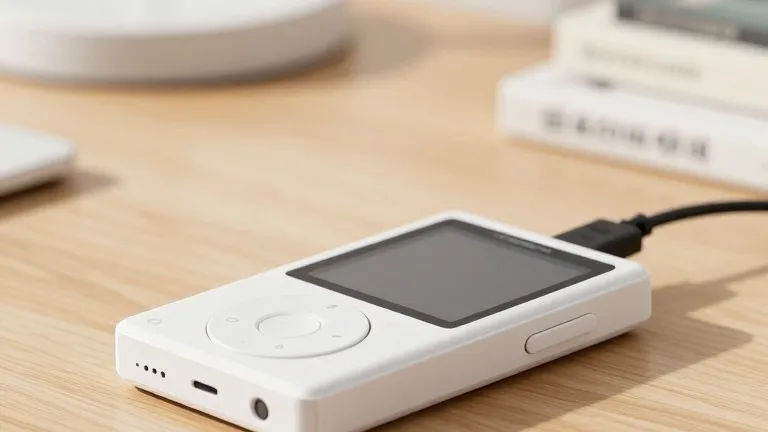
Steve Jobs stood before an audience in October 2001 with a simple problem to solve. The market was crowded with portable music players, but none of them offered a complete experience. He teased a breakthrough device that was not a Mac, promising a whole music library in a pocket for $399. That price point set the stage for a product that would dominate the industry until smartphones arrived.
The financial stakes were high for Apple at the time. The dot-com bubble had recently burst, and the company was in the middle of a recovery. Jobs had moved the company past its beige-box era with the success of Mac OS X and the iMac. He viewed the Mac as the hub for a digital lifestyle, connecting cameras, DVD players, and music devices. Music was the target because it was universal, and the market lacked a clear leader.
Jobs acknowledged that companies like Sony, Creative, and Sonic Blue already sold portable players. He divided the market into four categories: CD players, MP3 CD players, flash players, and hard-disk jukebox players. He identified the hard-disk player as the best entry point. The first iPod offered 5GB of storage. At 160Kbps, that capacity held about 1,000 pop songs. Jobs noted that for most people, that quantity represented their entire music collection.
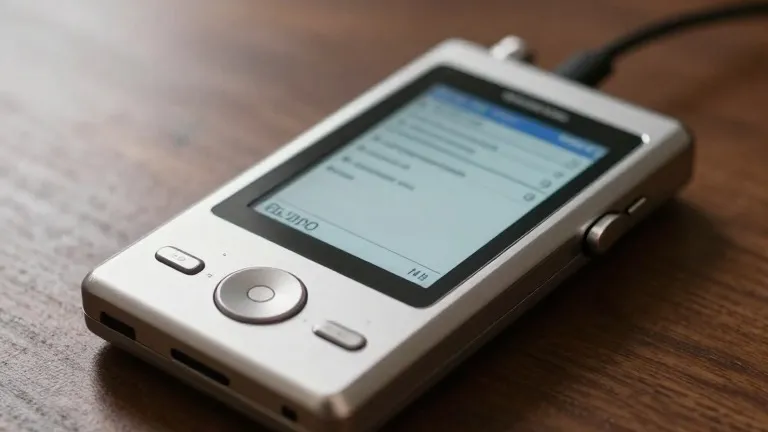
The device relied on a new component from Toshiba: a 1.8-inch hard drive that was 0.2 inches thick. This drive allowed the iPod to measure 2.4 by 4 by 0.78 inches. The unit weighed 6.5 ounces. Jobs claimed the player was lighter than most cell phones of the era. It featured 20 minutes of skip protection to handle movement. A single FireWire 400 cable handled both charging and data transfer.
Speed was a primary differentiator. Jobs stated that FireWire could transfer a full CD in five to 10 seconds. By comparison, USB connections of that time took roughly five minutes. Filling the device with 1,000 songs took about 10 minutes over FireWire, a process that would have consumed five hours over standard USB. The lithium-polymer battery provided 10 hours of continuous playback. Apple reported that an empty battery could reach 80% charge in one hour.
Design focused on durability and one-hand operation. The device featured a minimal back and sides. The control system used an accelerated scroll wheel with a piezoelectric clicker for tactile feedback. This allowed users to navigate by playlist, artist, or song. During the launch presentation, the first track played was Sarah McLachlan’s “Building a Mystery.”
The hardware launched alongside software updates. iTunes 2 debuted on the same day. The new software added MP3 CD burning and syncing capabilities for the iPod. When connected to a Mac, the device automatically matched the user’s curated library. The iPod also functioned as a FireWire hard drive when attached to a computer.
The product line lasted for two decades. The first iPhone arrived in early 2007, more than five years after the iPod launch. Both products shared Apple’s lineup for over a decade. The iPod’s popularity declined as smartphones matured. The last model was the seventh-generation iPod Touch, released in May 2019. Apple left the line unmaintained until it officially discontinued the product in May 2022.
Source: Tom's Hardware