The High Cost of the Big Ten Dream: Why Some D-III Stars Rise and Others Retreat
A split in the transfer market reveals that while top-tier competition attracts elite D-III talent, the structural differences in support and lifestyle often force a careful reevaluation of what success looks like.
By Giovanni Serrano ·
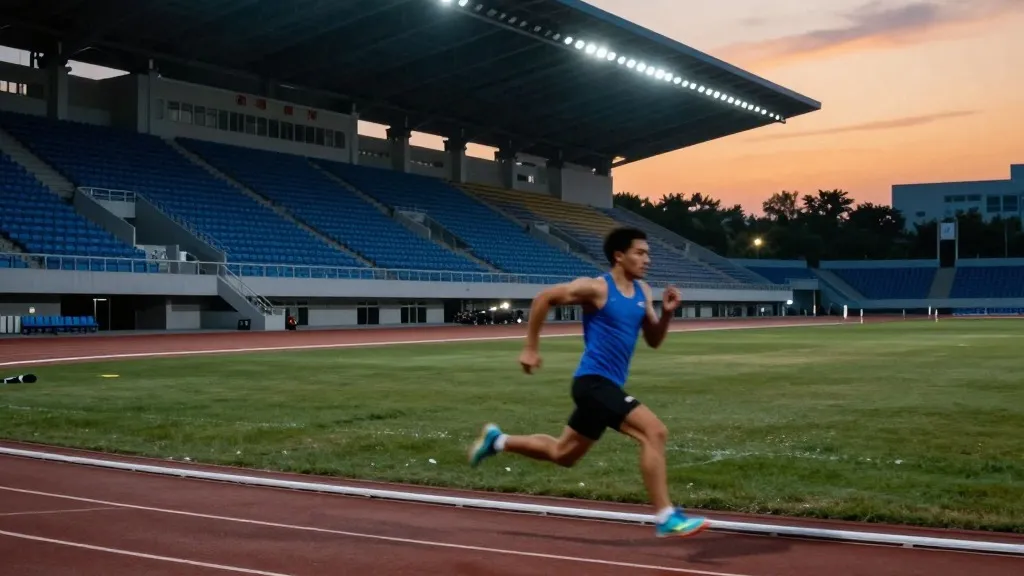
McKena Ramos stands as a senior at the University of Wisconsin, a position that was far from guaranteed when he arrived as a freshman. The Sheboygan native has become a regular contributor to the Badgers' track and cross-country squads, a role that reflects a significant leap from his earlier days. His presence on these rosters underscores a growing trend where Division III athletes are testing their mettle against the conference's highest level of competition. For Ramos, the move was not just about prestige; it was a calculated response to a personal milestone that changed his trajectory entirely.
The path to Madison began at UW-Oshkosh, where Ramos was recruited as a promising but under-the-radar athlete. His coach, Eamon McKenna, admitted that the coaching staff did not anticipate a freshman winning a national championship. Ramos, however, had set a private benchmark for himself. He decided that if he could claim the indoor 800-meter title, he would seriously consider the jump to Division I. He followed through, winning that indoor event and the outdoor 1500-meter title, which prompted his transfer to Wisconsin. The validation came quickly in the new environment, where he found the competition stiffer and the intensity higher.
Ramos is not operating in a vacuum. In recent years, a distinct pattern has emerged in the Big Ten, with every school in the conference now hosting at least one transfer from a Division III program. On the Badgers' football team, two players have made similar moves. Ricky Finco, a junior wide receiver who primarily works with the scout team, arrived after a year at UW-Whitewater. Ryan Ramczyk took a different route, dominating the offensive line at UW-Stevens Point before an All-American season in Madison that boosted his standing on NFL Draft boards. These cases suggest that the ceiling for D-III talent in the Big Ten is higher than previously thought.
Yet, the narrative is not uniformly positive. Emma Paulson offers a counterpoint to the upward mobility story. A freshman on the Wisconsin swim team, Paulson realized that the demands of top-level competition did not align with her personal and academic needs. She transferred to the University of St. Thomas, a Division III school in Minnesota. There, she concluded a highly decorated career with three individual national championships and nine All-American honors. Paulson noted that while her swimming times met Division I standards, the cultural fit was better suited to the smaller conference. She described the Division I experience as consuming, whereas Division III remained a manageable part of life.
The structural differences between the divisions play a crucial role in these decisions. Division III programs do not offer athletic scholarships and generally maintain smaller facilities. Ramos acknowledged that while the core running workouts remain similar, Madison provides resources like ice baths and dedicated athletic training that were absent in Oshkosh. He also credited the tutoring services at the Fetzer Center and the ability to take exams while traveling for his academic progress. Paulson, conversely, noted that at St. Thomas, she is held to the same standards as non-athletes without designated academic support, a trade-off she accepted willingly.
Looking ahead, the decision for future transfers will likely hinge on a simple but difficult question. McKenna advises athletes who stand out in Division III that opportunities will present themselves. The critical factor is whether an athlete can replace the dominance they enjoy at their current school. Ramos, who has dreamed of competing for Madison since middle school, says he is absolutely happy with his choice. Paulson, too, would make the same decision again. As the Big Ten continues to absorb D-III talent, the league gains depth, but the athletes must weigh the tangible resources against the intangible cost of lifestyle change.
Source: The Daily Cardinal
More Sports · Oshkosh news · Report a business · Got a Story?