Lula wins fourth term by 4 million votes, setting stage for legal fight over voting hours
Luiz Inácio Lula da Silva secured 51.79% of the vote in a runoff, while challenger Flávio Bolsonaro vowed to seek annulment due to a last-minute extension of polling hours.
By Giovanni Serrano ·
Luiz Inácio Lula da Silva will serve a fourth term as Brazil’s president after defeating Flávio Bolsonaro in the October 26 runoff.
The incumbent leader of the Workers' Party (PT) captured 64.2 million votes, representing 51.79 percent of the total. Flávio Bolsonaro, the son of former President Jair Bolsonaro, received 59.8 million votes, or 48.21 percent. The margin of victory stands at more than four million votes.
This outcome reverses the trajectory established in the first round held on October 4. At that time, Flávio Bolsonaro led his father’s political successor by two points. Polling data through the final days of the campaign showed a statistical tie. No major survey placed Lula ahead before the final count, and none predicted a gap nearly four points wide. The margin exceeded the one Lula achieved against Jair Bolsonaro in the 2022 election.
Lula framed the final weeks as a contest between democratic stability and authoritarian influence. He cited the 27-year prison sentence handed to Jair Bolsonaro for orchestrating a coup attempt after his 2022 defeat. In his victory address, Lula thanked young voters for defending democracy and older voters for turning out in high numbers. This turnout helped lower the abstention rate seen in the first round.
The president also emphasized Brazil’s international standing. He stated that the country does not accept being a backwater for other nations. He described Brazil’s role as central rather than peripheral in global discussions, a stance he linked to resistance against the influence of U.S. President Donald Trump.
Flávio Bolsonaro rejected the result immediately. He announced plans to ask the judiciary to annul the election. His objection centers on a judicial order that extended voting hours by two hours nationwide. The decision came from Supreme Court Justice Cristiano Zanin, a former lawyer for Lula. The order was issued one minute after the standard closing time for polling stations.
The PT alleged that the extension created logistical problems in right-leaning cities. They claimed insufficient free bus services were deployed for voters, a burden that fell heavily on poorer communities who typically support the left. Many polling stations closed at their original time because they did not receive the updated instructions in time. Kassio Nunes Marques, president of the Superior Electoral Court, acknowledged that the delay caused technical, operational, and security difficulties.
Flávio Bolsonaro called the situation unacceptable and a violation of equal rights. He stated that the rules of the game were changed by Lula’s allies in the Supreme Court. Despite these claims, the leaders of Brazil’s legislative chambers recognized Lula’s win. Hugo Motta, president of the Chamber of Deputies, and Davi Alcolumbre, president of the Senate, both backed the result.
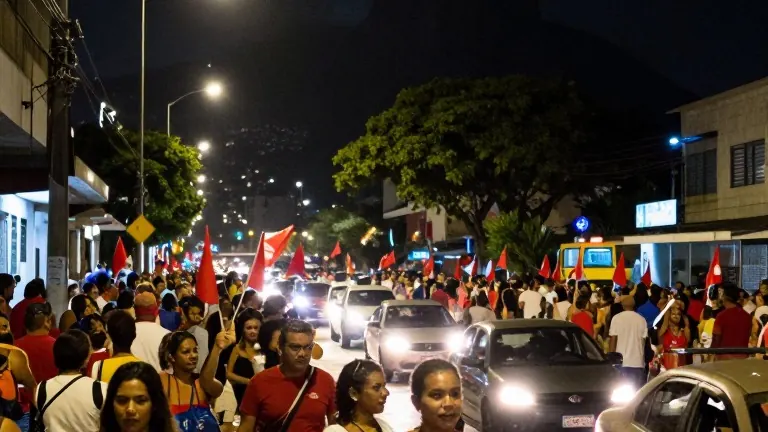
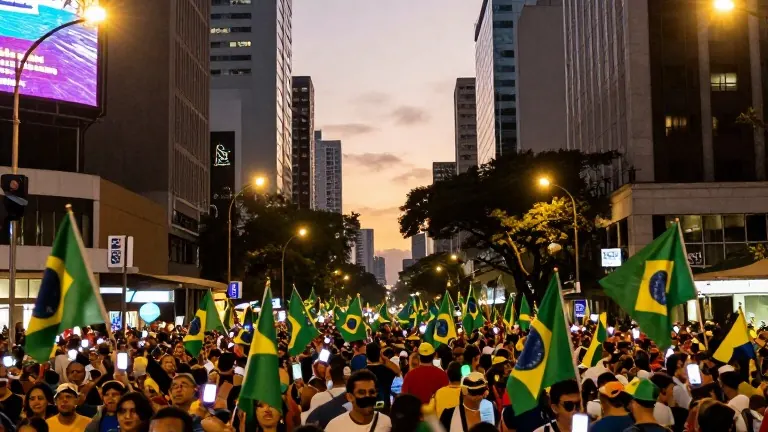
Celebrations in São Paulo drew tens of thousands of people to Avenida Paulista. Lula joined the crowds, where supporters chanted against the return of dictatorship. The scale of the event surpassed the 2022 victory celebrations. Approaching his 81st birthday, Lula adopted a new campaign strategy for the runoff. He purchased a smartphone for the first time and engaged actively on social media platforms that had previously been unfamiliar to him.
Lula’s administration faces a legislative environment that is the most right-leaning in the country’s modern history. He must negotiate with a Congress dominated by his political opponents. This structural challenge defines the immediate task of his new term.
Source: Latin Opinion