Musk Counters 22-Flight Lunar Fuel Estimate With 6 to 8 Range
SpaceX CEO disputes NASA safety panel's projection for Artemis IV refueling, citing upgraded hardware capabilities.
By Giovanni Serrano ·
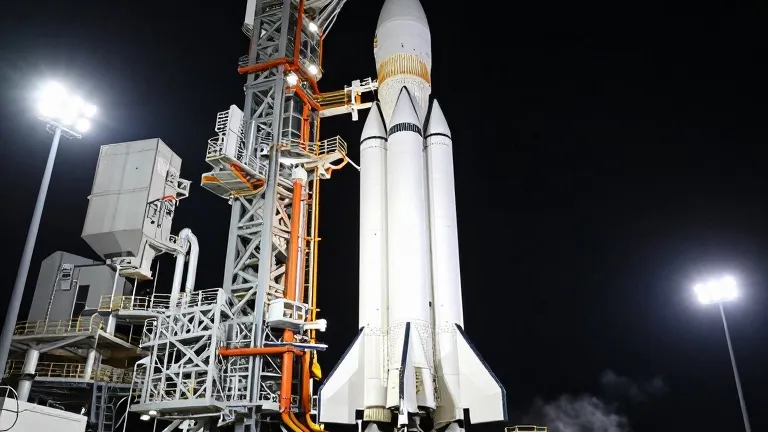
Elon Musk has formally challenged a projection by the Aerospace Safety Advisory Panel regarding the number of Starship launches required to fuel the Artemis IV lunar lander. In a response posted on X, Musk stated that the actual number of tanker flights needed will be between six and eight, directly contradicting the higher figure cited by panel members during a recent public meeting.
The dispute originated at the panel’s quarterly public meeting held on Thursday. Charlie Precourt, a former NASA astronaut serving on the advisory board, identified lander fueling as a primary risk for the 2028 mission. Precourt noted that previous estimates placed the requirement at approximately 22 flights. He warned, "We need to keep our eyes on numerous required fuelings for the lander," citing the complexity of orbital logistics.
The divergence in numbers stems from the operational limits of the Starship vehicle. The rocket expends nearly all its propellant reaching Earth orbit, necessitating an orbital depot system for lunar missions. SpaceX's plan involves launching a storage tank first, followed by successive tanker launches that dock and transfer remaining fuel. Once the depot is filled, the crewed lander launches, refuels, and proceeds to the Moon. Each tanker flight represents a full launch, adding to time, cost, and potential failure points.
Analysts point out that the total flight count depends on delivery efficiency and propellant loss. Starship carries cryogenic fuel that slowly boils off in orbit, with additional losses occurring during transfer. The NASA panel's estimate of 22 flights appears based on current Starship performance. Musk's lower range assumes the use of the upgraded V3 Starship, which is not yet fully operational but is planned for refueling operations.
The timeline for Artemis IV remains tight. Eric Berger of Ars Technica estimated that even with a rate of two Starship launches per week by the end of 2027, filling the depot at the panel's 22-flight level would take about three months. Musk has previously contested similar estimates, recalling a 2021 government document that suggested 16 launches. At that time, Musk described that number as "extremely unlikely" and maintained that eight tankers would be the maximum required.
Precourt acknowledged the high risk associated with Artemis IV, describing the mission as carrying "a large number of firsts." He also credited NASA Administrator Jared Isaacman for efforts to streamline the process for both SpaceX and Blue Origin. Blue Origin's Blue Moon lander does not rely on orbital refueling for its initial mission, creating a distinct logistical contrast with the SpaceX approach.
Source: Teslarati