Tehran Blames Washington for Collapse of Truce
Iranian leadership asserts that the United States broke the interim agreement while warning that military retaliation will be severe if hostilities resume.
By Giovanni Serrano ·
Iranian President Masoud Pezeshkian placed the burden of the recent diplomatic breakdown squarely on the shoulders of the United States. Speaking in an interview broadcast by Press TV on Saturday, Pezeshkian argued that Washington was responsible for the unraveling of the interim deal designed to end the conflict with the US and Israel. Despite the failure, he maintained that both nations should return to the negotiating table to finalize the arrangement.
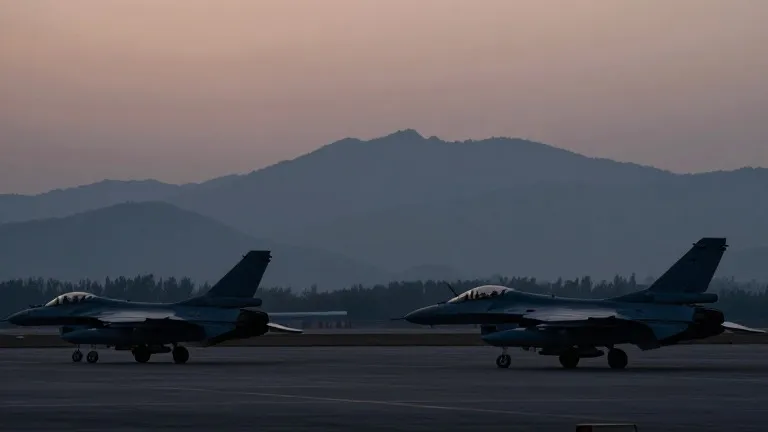
The President's comments arrive at a tense moment as fears grow that military operations could restart as early as this weekend. On Friday, US President Donald Trump hinted at further action, stating he might launch another operation under the codename Epic Fury. This was the name assigned to the initial US-Israeli campaign against Iran, which began on February 28. The threat of renewed strikes has heightened anxiety across the region.
Iranian military officials have responded with stern warnings. The Islamic Revolutionary Guard Corps indicated that even limited American strikes would provoke a reaction several times greater in scale. Ali Abdollahi, the Chief of Staff of the Iranian Armed Forces, declared on Saturday that US military forces would not be permitted into the Gulf under any circumstances. He told Trump that he could only dream of seeing American troops in the region, suggesting he would take that dream to his grave.
Political pressures are mounting on both sides of the conflict. Netanyahu remains committed to the goal of overthrowing the Iranian government, while his country faces a general election on Tuesday. In the United States, Trump faces crucial midterm elections on November 3. If Democrats secure control of both the House and the Senate, it would represent a significant setback for the President, who still has more than two years remaining in his final term.
Fatemeh Mohajerani, the government spokesperson, issued a memo on Saturday emphasizing that Tehran would not wait for permission to defend itself. She stated that while Iran seeks peace, it will respond to any aggression with severe consequences. Mohajerani clarified that the nation does not flee from dialogue but will not hesitate to protect its sovereignty. She warned that those who believe they can destroy Iran need to correct their calculations.
Domestic leadership is also addressing the aftermath of the war. Gholamhossein Mohseni Ejei, the head of the judiciary, met with Supreme Leader Mojtaba Khamenei to discuss strategies for tackling corruption. The two also reviewed plans for providing compensation to citizens affected by the conflict. Khamenei assumed the role of Supreme Leader after his father was assassinated during the opening strikes of the war. He has not appeared in public since taking office in early March.
Diplomatic channels remain active despite the rhetoric. Mohammad Bagher Ghalibaf, who serves as Parliament Speaker and chief negotiator, was reported to have met with Khamenei earlier this week. These internal consultations suggest that Tehran is carefully weighing its next moves while maintaining a public stance of strength and readiness for negotiation.
The situation remains fluid as both nations assess their options. The interim deal, once seen as a path to stability, has now become a point of contention. With elections looming in Israel and the United States, political leaders may be driven to take decisive actions. The coming days will reveal whether the threat of new strikes materializes or if the parties return to the table as Pezeshkian urged.
Source: Al Jazeera